



Internationaal Europees en buitenlands recht
Resultaat 613–624 van de 1550 resultaten wordt getoond
 May NATO interfere in internal armed conflicts of its own members or partners? This is the question that is examined in this essay. Although an interference by NATO against member states is (conceivably) contrary to NATO's funding principles, such a role for NATO might be possible when essential human rights are at stake. Interference by NATO on NATO territory could, if well balanced and approved of by all NATO members, in fact be in the interest of the NATO citizen. Moreover, this may strengthen a general rule of humanitarian intervention and this may (to some extent) deter parties or members from participating in internal armed conflicts on NATO territory. Furthermore, allowing NATO to internally interfere would facilitate the expansion of the number of members and partners. Then, although NATO would change and expand, it would still be able to firmly retain to the basis of a democratic rule of law.
 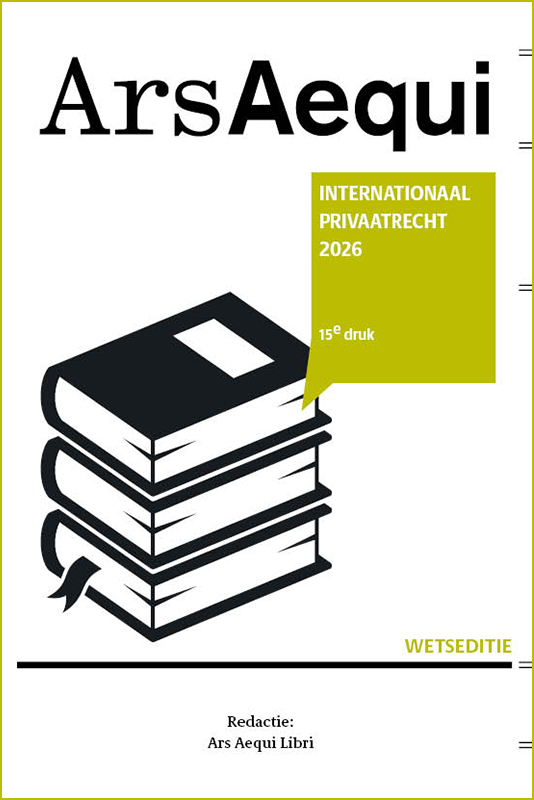 Internationaal Privaatrecht bevat Verordeningen, Verdragen & Wetten in de volgende rechtsgebieden: Algemeen en Persoonlijke staat, Familie- en Erfrecht, Vermogensrecht, Procesrecht. Teksten zoals deze gelden op 1 maart 2026.
Internationale arbitrage en fundamenteel recht
Th.M. de Boer
Supreme Court of the United States 18 March 1985, 473 U.S. 614, 105 S.Ct. 3346, 87 L.Ed. 2d 444, 1985 (Mitsubishi Motors Corporation v. Soler Chrysler-Plymouth, inc.) Hof van Justitie Europese Gemeenschappen (HvJ EG) 1 juni 1999, ECLI:EU:C:1999:269, zaak C-126/97, NJ 2000, 339 (Eco Swiss v. Benetton) In deze noot worden twee arresten over een geval van een kwestie die beheerst wordt door een fundamenteel recht en of deze kwestie desondanks vatbaar is voor arbitrage. Er wordt een uitspraak van het U.S. Supreme Court vergeleken met een arrest van het HvJ EG. De auteur komt tot de conclusie dat ondanks dat er sprake is van een andere rechtsfamilie (common law vs. civil law) er in vergelijkbare kwesties materieel dezelfde uitkomst is. Zie voor de oorspronkelijke uitspraak: Mitsubishi Motors Corporation v. Soler Chrysler-Plymouth
Annotaties en wetgeving | Annotatie
januari 2003
AA20030050
Resultaat 613–624 van de 1550 resultaten wordt getoond